How much paint do you need for a house exterior?
Measure the siding surfaces that will receive the same coating system. The calculator estimates four rectangular walls, optional triangular gables and additional measured siding, then subtracts unpainted openings. It applies the entered coat count and product coverage before rounding topcoat containers.
How are exterior wall and gable areas calculated?
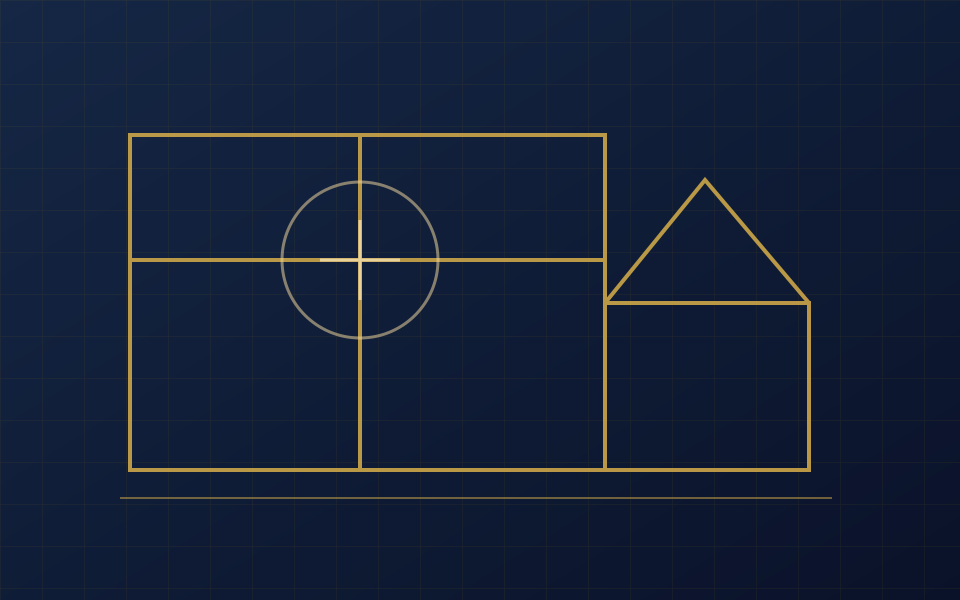
For a rectangular footprint, wall area is 2(length + width) × height to eaves. Each triangular gable adds base × rise/2. Use the gable rise above the eaves rather than the full wall height, which would double count part of the wall. Unequal gables or irregular extensions can be included as separately measured additional area.
Which windows and doors should be deducted?
Subtract only surfaces excluded from the siding coating. A painted door or matching trim should not be removed and then forgotten. The separate trim estimate uses its own measured surface, coat count and coverage. This is an area takeoff; narrow strips, reveals and complex profiles may need additional measured area.
Siding area = 2(length + width) × wall height + gable count × base × rise/2 + extra − openings; paint = area × coats ÷ label coverage
What is the paint coverage and coat formula?
Topcoat quantity = net siding area × coats ÷ labeled coverage per selected liquid unit. Multiply by 1 + allowance/100 for a separate explicit loss allowance. Coverage must describe one coat and the intended surface; a two-coat system cannot be entered as a single coat merely because the can lists a coverage area.
What does a forty-by-thirty-foot house example need?
A 40 × 30 ft footprint with 10 ft walls has 1,400 sq ft of rectangular wall. Subtract 200 sq ft of openings to get 1,200. Two coats at an illustrative entered 400 sq ft per US gal need 6 US gal before loss allowance. This coverage is a worked example, not a universal product recommendation.
Why are primer and trim calculated separately?
Primer may cover only repaired or bare areas and can have a different spread rate. Enter primer area, coats and coverage separately. Trim also uses its own area and coverage. Neither quantity is combined into the siding topcoat containers or their cost, since different products should not be treated as interchangeable liquid.
How do you buy whole paint containers?
Enter the actual topcoat container capacity in the selected liquid unit. Containers = ceil(topcoat quantity ÷ capacity). Optional price applies to that whole-container purchase. US gallons and liters are explicit choices; changing dimensional units converts area and coverage area while preserving the chosen liquid basis. Change both the liquid basis and its coverage/container values together.
Which inputs should you verify before calculating?
Check each measurement and the printed input unit. Required values must describe the same project scope; blank optional extras contribute zero unless a linked field requires them. Models a rectangular building with optional equal triangular gables. Use actual product coverage and separate primer/trim systems; roughness and spray loss need an explicit allowance.
| Input | Unit basis | When used |
|---|---|---|
| Building length | ft / m | all modes |
| Building width | ft / m | all modes |
| Wall height to eaves | ft / m | all modes |
| Identical triangular gables (optional) | as labeled | all modes |
| Gable base width | ft / m | gablesMode:yes |
| Gable rise above eaves | ft / m | gablesMode:yes |
| Unpainted window / door area (optional) | ft² / m² | all modes |
| Additional measured siding area (optional) | ft² / m² | all modes |
| Separate trim surface area (optional) | ft² / m² | all modes |
| Siding topcoat count | as labeled | all modes |
| Label coverage per selected liquid unit | ft² / m² | all modes |
| Extra paint allowance (%) (optional) | as labeled | all modes |
| Topcoat container capacity (optional) | as labeled | all modes |
| Price per topcoat container (optional) | as labeled | all modes |
| Primer label coverage per selected liquid unit | ft² / m² | primer:yes |
| Primer coat count | as labeled | primer:yes |
| Area needing primer | ft² / m² | primer:yes |
| Trim label coverage per selected liquid unit | ft² / m² | trimMode:yes |
| Trim coat count | as labeled | trimMode:yes |
How can you compare results and save the worksheet?
Calculate a baseline and add it to comparison, then change one assumption and calculate again. Copy or share the result, download the input and result sheet, or print that worksheet. Clear changes removes the current inputs and results; refreshing starts a clean worksheet.
Which related calculators help with this project?
Use Paint Calculator and Square Footage Calculator. Their measurements can inform the relevant inputs, but check that their units and scope match before transferring a value.