How much epoxy do you need?
Choose a coating or a rectangular casting. Each uses a different volume calculation; the final order includes a separate allowance and is rounded to the mixed volume in whole kits.
How does a coating volume estimate work?
Multiply surface area by target dry film thickness and number of coats. Divide by volume-solids fraction to estimate wet mixed coating. Product porosity and application losses remain separate.
What is dry film thickness?
Dry film thickness is the finished cured coating thickness, entered in mils where one mil is one-thousandth of an inch. Confirm the specified range on the product data sheet.
| Input or step | Example |
|---|---|
| Coated surface | 100 sq ft |
| Dry thickness per coat | 10 mils = 0.01 in |
| Coats and volume solids | 2 coats; 100% |
| Mixed theoretical volume | 4.719 L = 1.247 US gal |
| 10% allowance | 5.191 L = 1.371 US gal |
Why does volume solids matter?
A coating with less than 100% volume solids leaves less dry film than its wet applied volume. Enter the manufacturer’s value; do not assume every system is 100% solids.
How is a rectangular epoxy pour calculated?
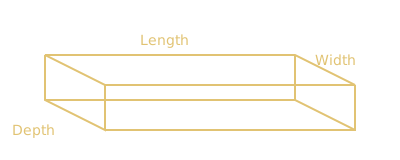
Multiply cavity length, width and depth using compatible units. The result is mixed material volume. Irregular molds, embedded objects and leakage require a separate measured adjustment.
How are resin and hardener split?
The A:B ratio is a ratio by volume. For a 2:1 ratio, two-thirds of mixed order volume is A and one-third is B. Weight-based mixing ratios must not be entered as volume ratios.
How do whole kits affect purchase quantity?
The tool divides required mixed volume by the kit’s printed total mixed volume and rounds up. It reports mixed component needs separately, but package A/B sizes control actual purchasing.
Can you compare coating and casting scenarios?
Run each mode as a separate scenario and add it to compare. A coating result and a casting result should not share a thickness assumption.
What does the example coating imply?
At 100 sq ft, two 10-mil dry coats and 100% solids, theoretical volume is about 4.72 L before allowance. Actual coverage can vary with substrate preparation and loss.
Which limitations should you check before pouring?
Manufacturer maximum pour depth, working time, temperature and substrate moisture can matter more than the geometric volume. Review the exact system instructions before mixing.